


Custom Apparel for Contractors
and Trades: Why Your Crew's Look Matters
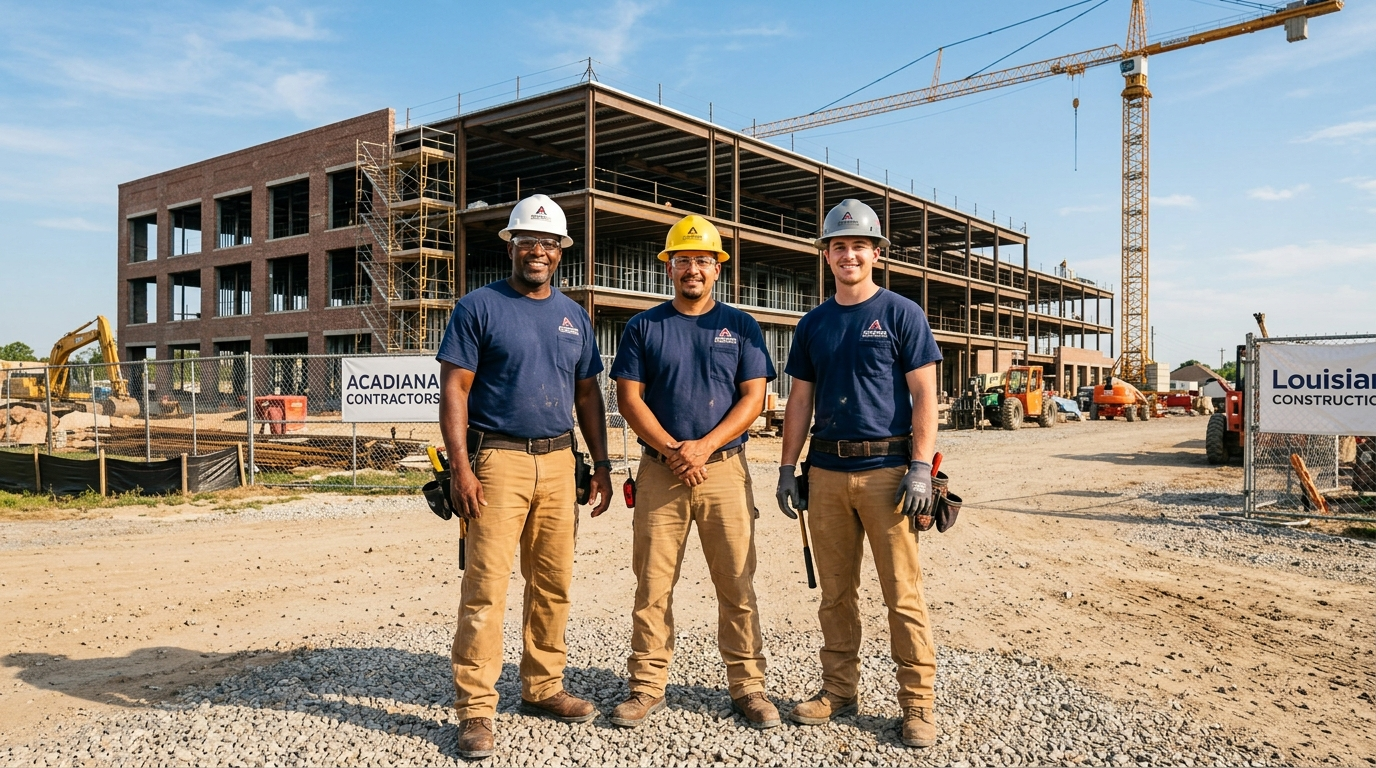
In trades and construction, your crew's appearance on a job site is a form of marketing. Before you pull up with a proposal, clients are already forming opinions about how professional your operation is. Custom branded workwear isn't about uniforms for their own sake — it's about showing up looking like the contractor worth hiring.
The Job Site Is Your Storefront
When your crew arrives in matching branded shirts and embroidered caps, you're sending a signal to every homeowner, property manager, and general contractor on that site: this is an organized business that takes its work seriously. That signal happens before you say a single word.
The trades market in Louisiana is competitive. Most contractors are skilled at what they do. What separates the ones who grow from the ones who stay flat year after year often comes down to how they present themselves — at the estimate, on the job, and when they're driving around town with their name on the side of a truck and their crew in branded shirts.
Your branded truck is advertising. Your website is advertising. Your crew's shirts are advertising — and they put your name in front of neighbors watching the work happen next door, which no website can do.
The core truth: Branded workwear doesn't just make your crew look more professional. It makes your business more memorable. In a market where most contractors get work through referrals, being memorable is how you grow.
What Branded Workwear Actually Does for a Trades Business
The benefits aren't just cosmetic. Here's what consistently happens when trades companies make the move to branded workwear:
- 01Builds credibility with homeowners and clients. Homeowners are letting strangers into their home and onto their property. A crew in matching branded shirts signals accountability and professionalism before a word is spoken. It's one of the lowest-cost trust signals a trades business can invest in.
- 02Creates passive marketing on and off the job. Every gas station stop, supply house run, and lunch break becomes a brand impression. If your crew is wearing your logo, you're advertising everywhere they go without spending another dollar on it.
- 03Strengthens team identity and on-site behavior. Crews in branded apparel tend to carry themselves differently. Wearing a uniform reinforces that they're representing something — a company standard, not just showing up to collect a check.
- 04Makes job site photos and video content usable. For contractors building a social media presence, having the crew in branded shirts instantly elevates job site photos and videos. Random civilian clothes in before/after shots undermine the professionalism of otherwise strong work.
- 05Reduces confusion on multi-trade sites. General contractors managing multiple subcontractors appreciate being able to identify which crew belongs to which company at a glance. It's a small thing that communicates organization and professionalism to the people deciding who they hire again.
salesperson on every job site.
What to Order — and What Actually Holds Up on the Job
This is where most first-time buyers get it wrong. They choose garments based on what's cheapest, not what's built for the application. Crew shirts that fade after six weeks or print that cracks after ten washes don't just look bad — they make your brand look bad.
Here's what holds up by application:
General crew shirts
Heavy-duty cotton (6.1 oz, like a Gildan 5000 or comparable) in a dark color that doesn't show job site grime. Screen printing is the right method for most crew shirts at any meaningful quantity — the ink cures into the fabric rather than sitting on top, so it handles abrasion, washing, and outdoor exposure better than other methods. See our guide on embroidery vs. screen printing for a detailed comparison by application.
Supervisors, estimators, and client-facing roles
An embroidered logo on a polo or button-down reads significantly more professional in client meetings and at estimates. Embroidery holds up better than print on lighter fabrics and looks sharp after dozens of washes without fading or cracking. For anyone walking into a client's office or sitting across a table at an estimate, embroidery is the right call.
Caps
Embroidery is the standard for hats and the one piece of branded workwear that almost every trades company can get into immediately. A structured cap with a quality embroidered logo is one of the most cost-effective brand assets in the category — your crew wears them daily, and clients notice.
Smaller specialty runs
For runs under 20 pieces — specialized roles, safety vests, or matching a small sales team — DTF (direct-to-film) transfers give you flexibility without screen printing minimums, and print quality has improved significantly in recent years. Read more about when to use DTF printing if you're weighing options for lower-quantity orders.
Tell Us About
Your Team
We'll build a quote that covers crew shirts, caps, and client-facing pieces — with honest pricing at the quantities that make sense for your business size.
Request a Quote →What Louisiana Contractors Need to Know About Durability
Louisiana's heat and humidity create specific demands that contractors in cooler climates don't have to think about. Shirts worn outdoors in South Louisiana summer heat need to breathe. Standard 100% heavy cotton holds up well for durability, but for crews working outdoors in peak summer, a performance blend (60/40 cotton-poly or a moisture-wicking blend) manages sweat better while still accepting screen printed ink cleanly.
If your crew is in direct sun daily, know that ink fades faster on shirts exposed to constant UV than it does on shirts worn in shaded or climate-controlled settings. Specifying higher-quality plastisol inks or water-based inks at the time of order extends the print life significantly. It's a small upcharge worth asking about if your crew shirts need to last a full season or more.
Worth asking your production partner: What's the recommended ink system for outdoor apparel in direct sun? The answer should change based on your garment fabric and the amount of UV exposure the shirts will see. If a vendor doesn't have an answer to that question, find one who does.
How to Place Your First Crew Apparel Order Without Overpaying
Most trades companies new to branded workwear overthink the first order. The instinct is to get every role covered, every garment style sorted, and every option figured out at once. The better approach is to start simple and build from there.
- Settle on one design — your logo, properly formatted for production. A vector file is ideal; if you don't have one, ask your production partner about artwork prep services.
- Choose one core garment style (crew shirts) in one or two colors. Complexity can come later once you know what your crew actually wears and likes.
- Order at a quantity that gets you to a meaningful tier — typically 24 or more pieces for screen printing. Below that, per-unit cost rises quickly because setup costs are spread across fewer pieces.
- Get sizing right before you order. Poll your crew with a simple size chart and keep a spreadsheet. Wrong sizes increase waste and reorder costs significantly.
- Build in proper lead time. Production from artwork approval to delivery typically runs 7 to 14 business days. If your crew needs to be branded for a major contract kickoff, plan a full month ahead — not the week before.
The other cost trap to avoid: waiting until apparel is urgent. Rush orders carry a fee that reflects the real operational cost of compressing production. If branded workwear has been on your to-do list, the cheapest time to do it is when you're not in a hurry.
Frequently Asked Questions
What's the minimum order quantity for crew shirts?
For screen printing, the practical minimum is 12 to 24 pieces, depending on design complexity and color count. Below 12 pieces, the per-unit cost of screen printing is high enough that DTG or DTF printing is usually a better fit. If you're outfitting a small crew of fewer than 15 people, ask about DTF — you'll get comparable quality at quantities that make economic sense.
Can I order different shirt colors in the same production run?
Yes, with some caveats. Different shirt colors often require separate production runs, which affects setup cost and minimum quantities. If your design uses white ink on a dark shirt and a dark ink on a light shirt, those are two different setups. Discuss your color needs upfront with your production partner — the conversation will save you from a surprise on the quote.
What file format do I need for my logo?
Vector files — .ai, .eps, or production-ready .pdf — are preferred for screen printing and embroidery. If you only have a PNG or JPEG of your logo, bring it to the conversation anyway. Depending on the complexity of the design and the resolution of the file, it may be usable as-is for some methods, or it may need artwork prep as part of your order.
Do you work with contractors outside the Gonzales area?
Yes. While we're based in Gonzales, Louisiana, we serve clients across the state and ship anywhere in the United States. Most of our workflow — quotes, proofs, approvals, and order tracking — happens digitally, so geography isn't a barrier.
What's the best way to handle sizing for a crew I don't see in one place?
Send your crew a sizing chart (we can provide one) and have each person respond with their size before you finalize the order. A simple group text or email works fine for small crews. For larger operations, a shared spreadsheet where each crew member enters their size and role takes about five minutes to set up and prevents the most common cause of reorder costs: wrong sizes.
Get a Quote for Your Crew
Tell us about your team size, what roles need branded apparel, and your timeline. We'll come back with honest pricing, garment recommendations, and a clear plan — no guesswork, no surprises.
Request a Quote →We respond within 24 hours. No commitment required.